Introduction
In today’s world, where energy costs are rising and sustainability is becoming a priority, choosing the right air conditioner is more than just about comfort. Traditional ACs consume large amounts of electricity, while inverter ACs are designed to deliver cooling that is both powerful and energy‑efficient. This blog explores the unique advantages of inverter ACs, helping homeowners and businesses make smarter cooling decisions.
1. Consistent Cooling Without Fluctuations
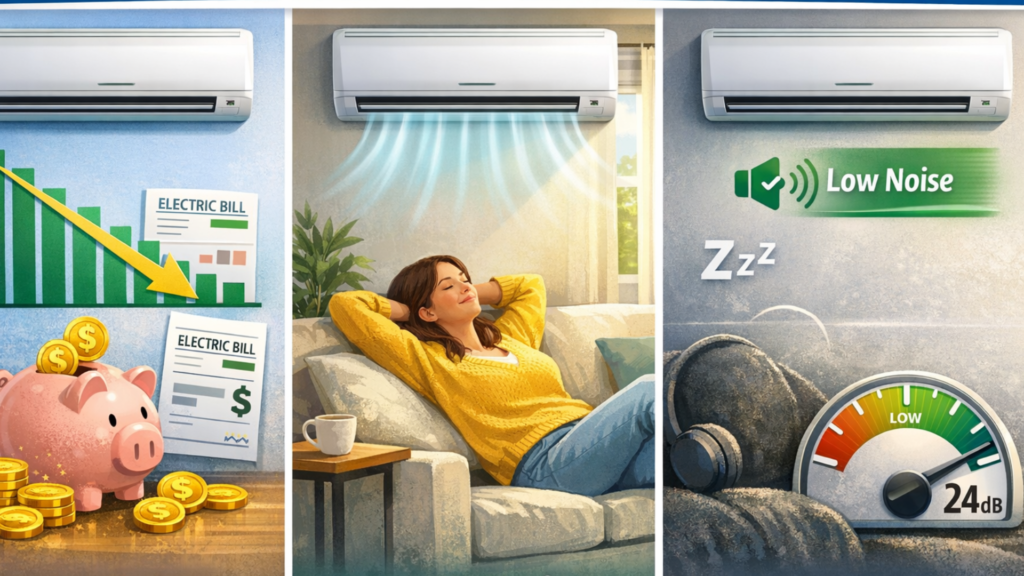
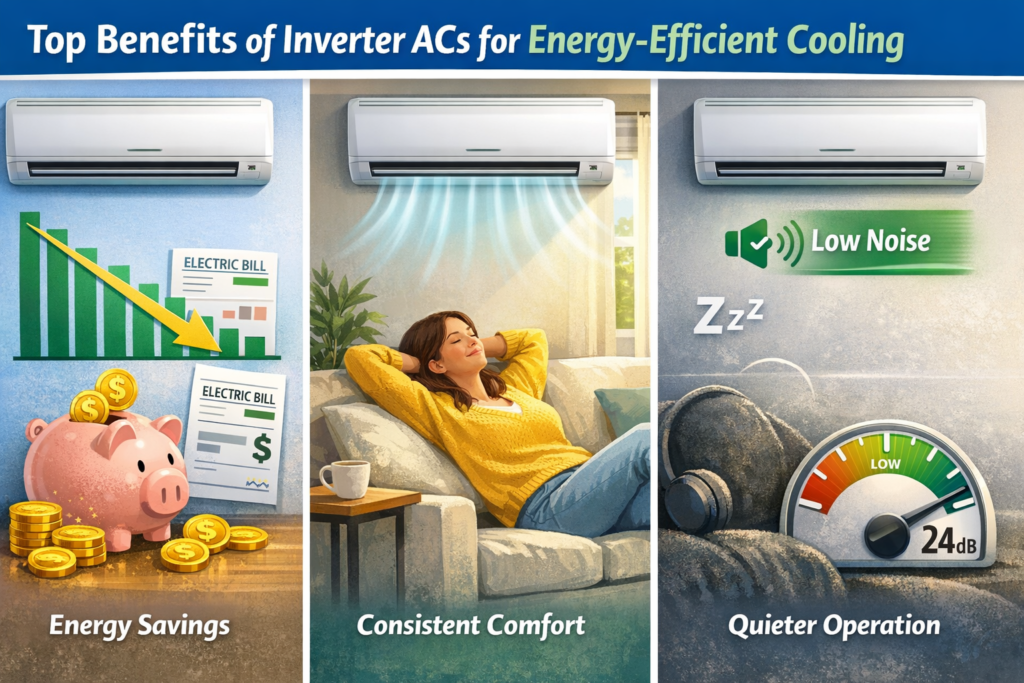
Unlike conventional ACs that switch the compressor on and off repeatedly, inverter ACs adjust compressor speed based on room temperature. This ensures:
- Stable cooling without sudden temperature drops or spikes.
- Enhanced comfort as the room maintains a uniform climate.
- Reduced noise levels, making them ideal for bedrooms, offices, and study areas.
2. Significant Energy Savings in inverter ACs
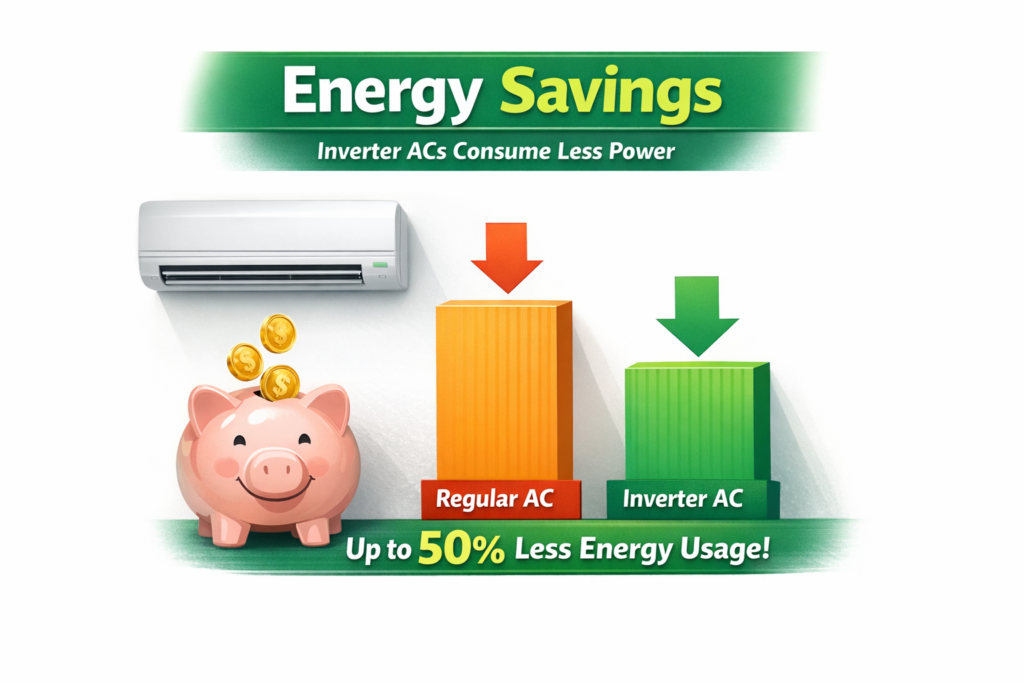
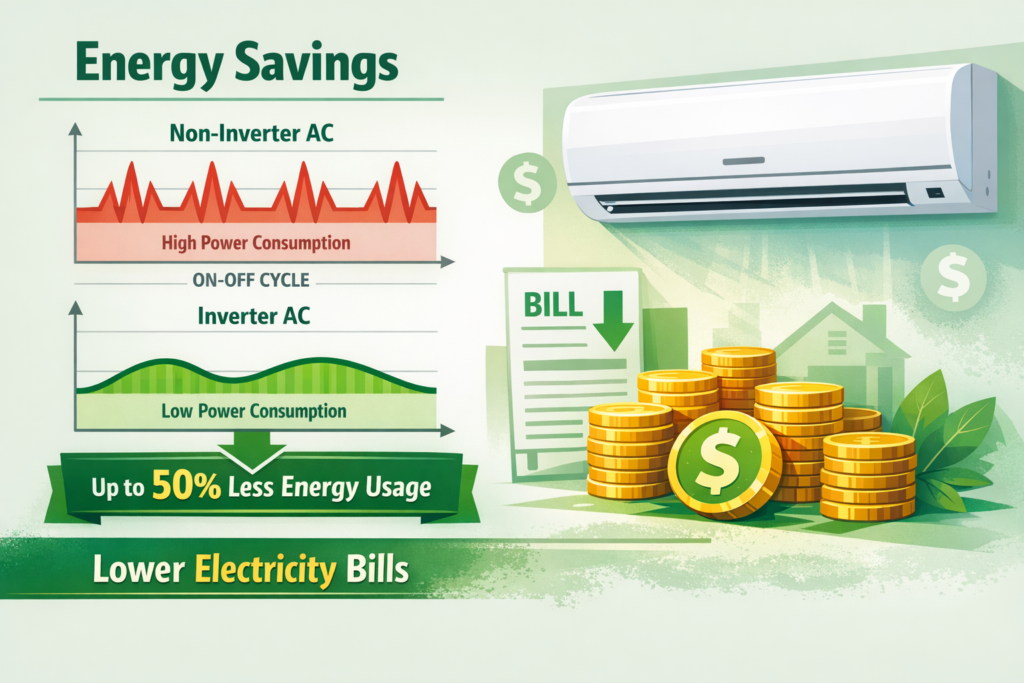
Energy efficiency is the biggest selling point of inverter ACs. By optimizing compressor speed:
- They consume 30–50% less electricity compared to non‑inverter models.
- Lower monthly electricity bills make them a cost‑effective long‑term investment.
- Reduced energy consumption contributes to a smaller carbon footprint, aligning with eco‑friendly living.
3. Faster Cooling Performance in inverter AC
Inverter ACs reach the desired temperature quicker because they can run the compressor at maximum speed initially. This means:
- Rapid cooling during hot summer afternoons.
- Less waiting time for comfort.
- Efficient performance even in larger rooms or open spaces.
| Benefit | Description | Impact on Users | SEO Keywords |
|---|---|---|---|
| Energy Savings | Inverter ACs adjust compressor speed based on cooling demand, reducing power consumption by up to 50%. | Lower electricity bills and reduced carbon footprint. | energy-efficient AC, inverter technology, save electricity |
| Consistent Comfort | Maintains a steady temperature without frequent ON/OFF cycles, ensuring uniform cooling. | Enhanced comfort and better sleep quality. | consistent cooling, smart temperature control, comfort air conditioning |
| Quieter Operation | Operates at variable speeds, minimizing noise compared to traditional ACs. | Peaceful environment ideal for homes and offices. | silent AC, low noise cooling, inverter air conditioner |
| Longer Lifespan | Smooth operation reduces wear and tear on components. | Fewer maintenance issues and extended durability. | durable AC, long-lasting inverter, low maintenance |
| Eco-Friendly Performance | Uses less energy and eco-friendly refrigerants, lowering greenhouse gas emissions. | Sustainable cooling solution for modern homes. | eco-friendly AC, green cooling, sustainable air conditioning |
4. Longer Lifespan and Durability
Since inverter ACs avoid the constant start‑stop cycle of traditional units:
- Wear and tear on components is minimized.
- The compressor operates smoothly, extending the overall life of the AC unit.
- Reduced mechanical stress means fewer breakdowns and maintenance costs.
5. Environmentally Friendly Cooling
With global focus on sustainability, inverter ACs stand out as a greener choice:
- Lower energy consumption reduces greenhouse gas emissions.
- Many models use eco‑friendly refrigerants that are safer for the environment.
- Choosing inverter technology supports sustainable living practices.
6. Smart Technology Integration
Modern inverter ACs often come with advanced features such as:
- Wi‑Fi connectivity for remote control via smartphones.
- Smart sensors that detect occupancy and adjust cooling automatically.
- Energy monitoring systems to track and optimize usage.
Conclusion
Investing in an inverter AC is not just about staying cool—it’s about saving energy, reducing costs, and contributing to a sustainable future. With benefits like consistent cooling, faster performance, durability, and eco‑friendliness, inverter ACs are the smart choice for energy‑efficient cooling in modern homes and offices.