

Introduction
When the summer heat begins to rise, one of the most common questions homeowners face is: Split AC vs. Window AC – which cooling system is the right fit for my home? Choosing between these two popular air conditioners isn’t just about beating the heat; it’s about finding a balance between comfort, energy efficiency, installation convenience, and long‑term value. While a Window AC is often seen as a budget‑friendly and straightforward option, a Split AC offers modern design, quieter performance, and advanced features that appeal to today’s households. Understanding the differences between these two systems will help you make an informed decision that suits your lifestyle, room size, and budget.
What is a Window AC?
A Window AC is a compact, single-unit cooling system designed to fit into a window or a wall opening. It houses all its components—compressor, condenser, and evaporator—within one box. Because of its straightforward design, installation is quick and affordable. Window ACs are often the go-to choice for small rooms, rental apartments, or budget-conscious households. They deliver reliable cooling without demanding much maintenance, making them a practical solution for those who want simplicity.
What is a Split AC?
A Split AC, on the other hand, comes with two separate units: an indoor unit that blows cool air into your room and an outdoor unit that expels heat. This design not only makes Split ACs quieter but also more aesthetically pleasing, as the indoor unit blends seamlessly with modern interiors. Split ACs are available in a wide range of capacities, making them suitable for larger rooms, offices, or homes where cooling efficiency and style matter. They also tend to offer advanced features like inverter technology, better air filtration, and smart controls.
Cooling Efficiency and Performance
When it comes to performance, Split ACs generally outshine Window ACs. Their dual-unit design allows for faster cooling and more consistent temperature control. Many Split ACs come with inverter compressors, which adjust cooling based on room temperature, saving energy in the long run. Window ACs, while effective in smaller spaces, may struggle to maintain uniform cooling in larger areas. If your priority is powerful cooling with minimal noise, Split ACs are the clear winner.
Installation and Maintenance
Installation is one of the biggest differences between the two. Window ACs are easy to install—just slide them into a window frame or wall slot, and they’re ready to go. Split ACs require professional installation, involving drilling, piping, and electrical work, which adds to the upfront cost. However, once installed, Split ACs are relatively low-maintenance and offer better durability. Window ACs, though simpler, may require more frequent servicing to keep them running efficiently.
Cost Considerations
Budget plays a crucial role in this decision. Window ACs are more affordable both in terms of purchase price and installation. They’re ideal for students, small families, or anyone looking for a cost-effective cooling solution. Split ACs, while more expensive, justify their price with superior cooling, energy efficiency, and modern features. If you view your AC as a long-term investment, a Split AC may offer better value over time.
Energy Efficiency
Energy consumption is another factor to weigh. Split ACs with inverter technology are designed to optimize electricity usage, making them more energy-efficient than traditional Window ACs. For households concerned about rising electricity bills, this can be a game-changer. Window ACs, though less efficient, can still be economical for short-term or limited use.
Which One Fits Your Home?
The choice between Split AC and Window AC ultimately depends on your home setup and lifestyle. If you live in a small apartment, have budget constraints, or need a quick cooling solution, a Window AC is practical and effective. But if you want a quieter, more stylish, and energy-efficient system for larger spaces, a Split AC is worth the investment. Think about your room size, budget, and long-term comfort before making the decision.
Final Thoughts
Both Split ACs and Window ACs have their place in Indian households. A Window AC is like a dependable friend—affordable, easy to install, and perfect for smaller spaces. A Split AC, however, is the modern choice—sleek, efficient, and built for long-term comfort. By weighing your priorities, you can choose the cooling system that truly fits your home and lifestyle.
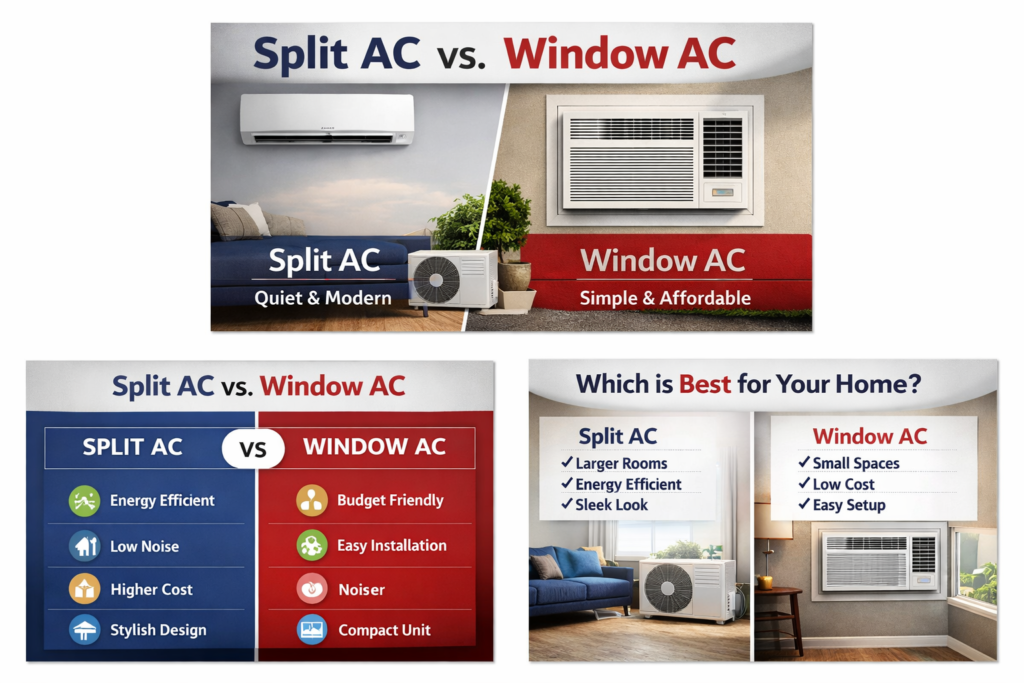
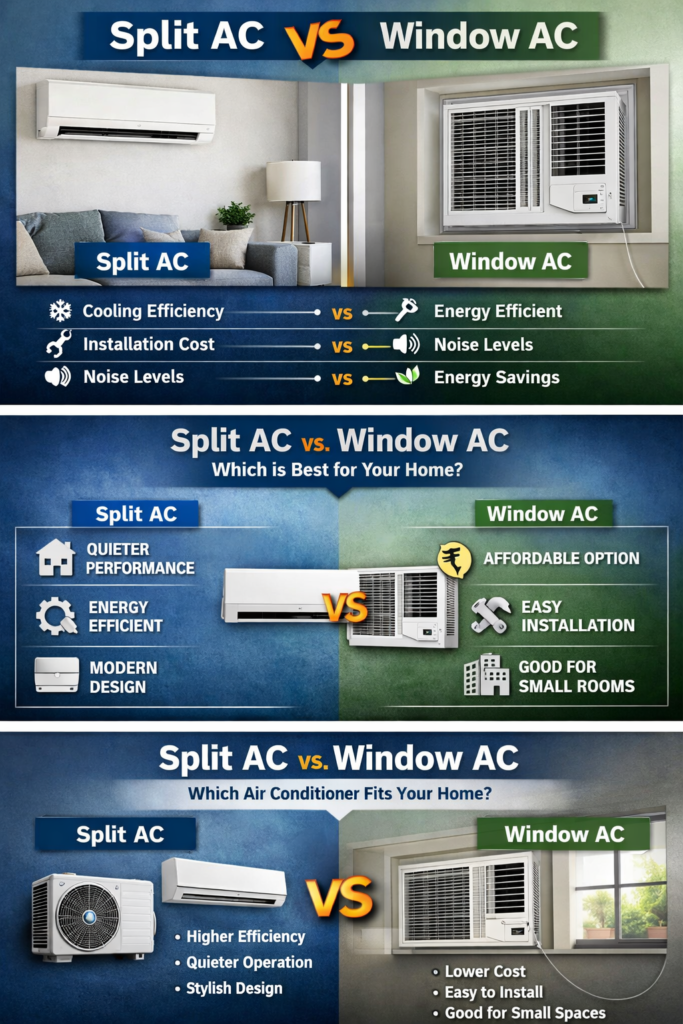
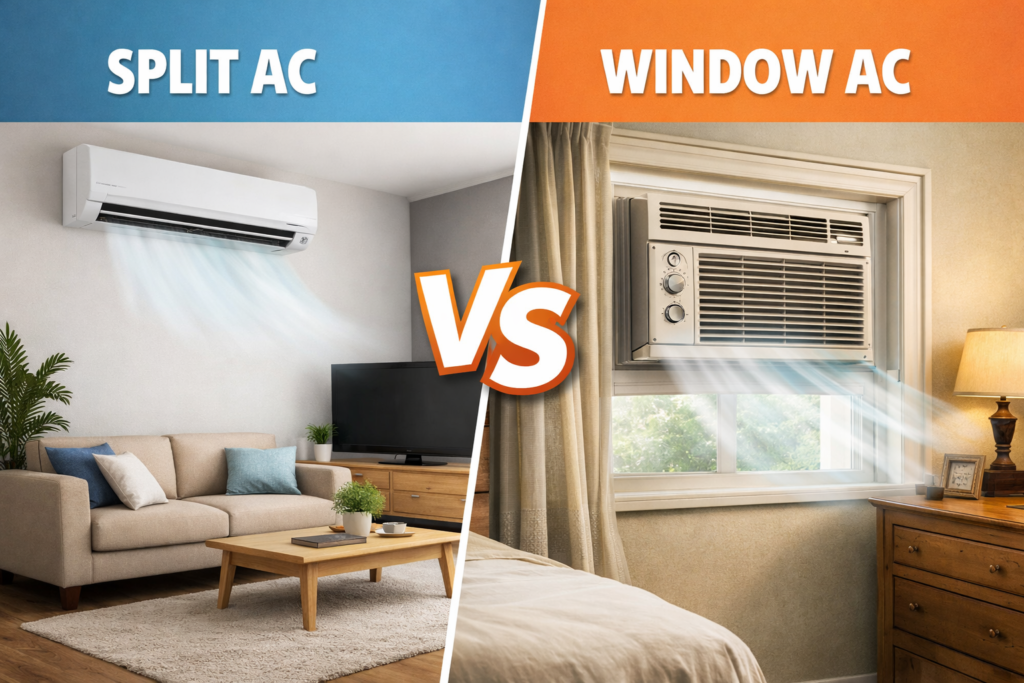
Split AC vs. Window AC: Which Cooling System Fits Your Home?
When summer arrives and the heat begins to feel unbearable, choosing the right air conditioner becomes more than just a purchase—it’s an investment in comfort, energy efficiency, and your lifestyle. Among the most popular options available in India are Split ACs and Window ACs. Both promise relief from scorching temperatures, but they differ in design, installation, performance, and suitability for different types of homes. Understanding these differences will help you make a smarter choice that aligns with your budget, space, and cooling needs.
Understanding Window ACs
Window ACs are the traditional cooling systems that many households still rely on. Compact in design, they are installed directly into a window or a wall opening. Their biggest advantage lies in simplicity: one unit houses both the compressor and the evaporator, making installation quick and cost‑effective. For small rooms or apartments, a Window AC can be a practical solution because it doesn’t demand complex setup or additional space.
However, the design also comes with limitations. Window ACs tend to be noisier since all components are packed into a single unit. They may also obstruct natural light or ventilation when fitted into a window. While modern models have improved energy efficiency, they generally consume more power compared to Split ACs when cooling larger areas.
Understanding Split ACs
Split ACs, on the other hand, are sleek, modern systems that consist of two units: an indoor unit that delivers cool air and an outdoor unit that houses the compressor. This separation allows Split ACs to operate more quietly and efficiently. Their stylish design blends seamlessly with interiors, making them a preferred choice for contemporary homes.
One of the strongest advantages of Split ACs is their ability to cool larger spaces evenly. With advanced features like inverter technology, they adjust cooling based on room temperature, reducing electricity bills in the long run. The installation process is more complex and requires professional assistance, but the result is a cleaner look and better performance.
Comparing Split AC and Window AC
The choice between Split AC and Window AC depends on several factors:
- Space and Aesthetics: If you want a modern, unobtrusive design, Split ACs win. Window ACs are bulkier and can affect the look of your room.
- Budget: Window ACs are more affordable upfront, while Split ACs cost more initially but save money through energy efficiency.
- Noise Levels: Split ACs are quieter, making them ideal for bedrooms and study areas. Window ACs may produce noticeable noise during operation.
- Cooling Capacity: Split ACs are better suited for larger rooms or halls, while Window ACs are sufficient for smaller spaces.
- Installation: Window ACs are easy to install and relocate, whereas Split ACs require professional installation and are less portable.
Which One Fits Your Home?
If you live in a compact apartment or are looking for a budget‑friendly option, a Window AC might be the right fit. It’s straightforward, reliable, and effective for smaller spaces. But if you prioritize aesthetics, quiet operation, and long‑term savings, a Split AC is worth the investment. Families with larger living areas or those who value energy efficiency often find Split ACs to be the better choice.
Ultimately, the decision comes down to your lifestyle and priorities. Think about the size of your room, your budget, and how much you value design and efficiency. By weighing these factors, you’ll be able to choose an AC system that not only cools your home but also enhances your comfort and quality of life.
❓ Frequently Asked Questions
1. Which is more energy‑efficient: Split AC or Window AC? Split ACs, especially inverter models, are generally more energy‑efficient because they regulate compressor speed. Window ACs consume more power in comparison, though newer models are improving.
2. Is a Split AC quieter than a Window AC? Yes. Split ACs have the compressor placed outside, which reduces indoor noise. Window ACs house all components in one unit, making them louder during operation.
3. Which AC is better for small rooms? Window ACs are ideal for small to medium rooms due to their compact design and affordability. Split ACs are better suited for larger spaces where consistent cooling is required.
4. What about installation and maintenance costs? Split ACs require professional installation and can have higher maintenance costs. Window ACs are easier to install, remove, and maintain, making them budget‑friendly for renters or short‑term use.
5. Which AC should I choose for long‑term investment? If you plan to stay in the same home and want efficient, quiet, and stylish cooling, a Split AC is the better long‑term investment. For temporary setups or tighter budgets, a Window AC is a practical choice.